Showing posts with label Exercise Bike. Show all posts

Friday, August 27, 2010

Bike and Run Adventure Racing on a Budget

Bike and Run Adventure Racing

Gerald Fusil is a man who always puts his ideas into action and others follow. The founder of the Raid Gauloises, The world’s first true expedition race is always on the lookout to expand the sport. The cost of competing in adventure racing has reached a level that few teams can now afford. Organisers and adventure racers are faced with high travel and insurance costs. One way to attract racers is to offer large sums in prize money, and top teams can make a living, but what about the average racer.

Last Year, During the annual Reunion D’Aventures race, Gerard Fusil added a bike and run discipline which required the four person team to share two mountain bikes during a couple of legs of the race. The trial was a success as teams were forced to think of tactics to complete the legs in the fastest possible way. Some teams doubled up on the downhill sections, others stayed, whilst the more successful set up a relay system with the rider going a set distance before leaving the bike at the edge of the track for their team mate, who would get on and then leapfrog them.

Gerard Fusil saw an opportunity to return once again to the basis of Expedition Adventure Racing. Providing teams the chance to explore a country, interface with the local population and race in exotic locations with out the need to transport large amounts of gear. Gerard Fusil announced his ideas at the Reunion D’Aventures prize giving and the world waited with bated breadth.

September 2005 saw Gerard Fusil Launch the Bike and Run Concept to the World with the Oman Adventure. Details were brief, two person teams to share one bike with only one person to be on the bike at one time. The race would be run in a number of stages including a night stage and teams had to be prepared to camp in the wild. Time was short so Gerard Fusil used the course notes from the 1992 Raid Gauloises for parts of the course.

Gerald Fusil made one other departure from the norm by pre-announcing the lengths of each stay and the names of the overnight camps. The race was to take place on the East Coast of Oman, however some of the place names were only known to the locals.

December 2005. A barmy evening camped by the sea saw Gerard Fusil briefing the gathered teams from France, Oman, UK, Réunion, Austria, Holland and Australia. Most teams had arrived in the morning so had little time to prepare. Support vehicles were shared by two teams, so competitors spent the night poring over maps and packing gear into the vehicles by torchlight.

The following day at dawn a convoy of vehicles transported the team to the start line in a nearby Wadi. The first day included a section of running only along goat tracks and this proved to be decisive as the Australian and one local Omani team got lost allowing a French team to build an unassailable lead.

Later in the week Gerard Fusil had mapped out the course with a 17k twisting climb from the sea to 1500 metres and also a section of canyoning with a number of swims.

Gerard Fusil had arranged camping or bivouacs in a number of scenic areas, with the stages starting in the early morning most teams would finish around mid-day or early afternoon.

The terrain in Oman is varied from lush oasis to harsh rocky hillsides and of course seas of sandiness where the teams finished the race. Gerard Fusil held the prize giving in Muscat the winners being a husband and wife team Wilsa Sport Helly Hansen from France. Second place went to the Australians and a Local Omani team came in third.

Teams came from many different backgrounds, Adventure racers, tri-athletes, marathon runners, mountain bikers; the final count saw adventure racers however leading the way.

Virtually all teams adopted the general tactic of leap frogging, however there were at least a couple of incidents when teams missed the bike, including one on the long climb for an all female team which required an extra 4k to be covered to collect the bike!

The Inaugural race proved to be a success and now Gerald Fusil has announced the second race of the series which will return to a different area of Oman at the end of November.
.


Read more...

Sunday, August 22, 2010

Spring Tune Up Tips

Spring Tune Up Tips - bike accessories, Exercise Bike, Mountain Bike, Hybrid Bike, Folding Bicycle, BMX Bike, tips,


If you don't ride in the winter, you've probably spent the winter months on the couch eating chips and watching television. Before you know it, spring will be here and a new season of mountain biking will begin. Even though your body may not be in shape, these tips will ensure that your bike is.

Before you take your bike out, check the wear and tear on your components and adjust them if its necessary. Start off with your chain. If you haven't replaced it in a year or more, it's time to do so. Over time, the individual parts in the chain will get worn out, increasing its effective length.

As this happens, the chain is no longer able to conform to the cog and the teeth of the chain ring, so it wears those teeth out to fit the profile of the chain. If you can replace the chain before it stretches too much you'll save yourself from having to replace high priced cogs and chain rings.

Now, check the bearing surfaces. These include your bottom bracket, hubs, and the headset. Each of these should turn without a problem with no play in the system. Before checking the bottom bracket, make sure each cranking arm is snugged tight. Next, hold on to the crank arm (not the pedal) and wobble it back and forth. If you hear any clicking or if the crank arm binds, the bottom bracket needs to be adjusted.

Do the exact same thing with your hubs. Take the wheels off the bike, spin the hub axles, then feel for any free play or binding. If you feel play or binding, you need to make an adjustment. To check the headset, start off by putting the newly adjusted wheels back on the bike.

Now, grab the front brake and pull and push the handle bars back and forth. There shouldn't be any play. If you lift the front end off the ground, the fork should turn very smoothly. If it feels rough, it needs to be either adjusted or replaced.

While your looking, check the condition of your cables and housing. The cables should be rust free and the housing shouldn't be cracked or kinked. If you see any of this you should replace the offending device, as if you don't your shifting and braking will be sluggish.

Last, you should inspect your brake pads. Most pads will have ridges or indicator marks that will let you know when they need to be replaced. Brake pads that are worn out will comprimise both safety and braking efficiency.

Once you've got the tune ups out of the way, it's time to go for a ride. With your mountain bike running better than ever, all you have to do now is have fun!

Read more...

Tuesday, August 10, 2010

Bicycle Accessories That Make Riding Easier

When you browse around a bike shop, it is easy to get caught up in all of the accessories there are to buy. Some you can easily brush off and find no need for, however, even casual bike riders should consider purchasing various bicycling accessories to make their riding much more comfortable. You don't need any accessories to ride a bike (accept for a helmet for safety), however, I realized after starting back to riding that specific items are now a necessity for myself.

The first thing I purchased for my bicycle was a well-cushioned comfort seat. You can find various types in a bike shop including ones that you can pull over your regular seat. I prefer buying a whole new seat rather than to cover up an uncomfortable one. If you ride for exercise or just for fun, a good padded seat will allow you to ride for much longer periods of time. You can install a new seat yourself or have the bike shop do it for you. Seats are one of the many bicycle parts that are easy to self install.

Another accessory update that helps are pedals with teeth. Most new bicycles come with stock pedals that offer no real grip. These types of pedals are made of solid steel and have teeth or claws that provide a strong grip for the soles of your shoes. These types of pedals can prevent your feet from slipping off of the pedals which can cause an accident.

If you do any type of night riding, it would be wise to invest in a quality headlight. I learned not to go too cheap on a bicycle light because the cheaper models barely light up enough for you to see what is ahead of you. A good high beam bicycle light will provide tons of light to see the road ahead as well as alert any oncoming traffic. The better quality lights usually require a battery pack that are rechargeable. The same goes for having a back light. These are not as expensive but are a good idea to have as the more light you have the less chance of cars not seeing you.

One accessory that you may not consider is the bicycle bell. I was one of those people who laughed at the thought of having a bell on my bike. A bell makes it much easier to warn people ahead of you to make way because you are coming through. This helps a lot when you are on a bike trail. Some bike trails also have people walking on them. Rather than yelling out "on your left" or "on your right", you can simply ring your bell a few times and people will move to the side. This also works great when passing up other bike riders who may not hear you yell out.

Other accessories that add to comfort are bicycle gloves and bottle attachment. Padded gloves will save your hands from calluses and a bottle attachment makes carrying water or a sports drink much easier. Next time you are browsing bicycle accessories, you may want to ask yourself if a particular item could make your riding experience much more comfortable as well as safer.

Read more...

Don't Expect Bike Magic

Expect Bike Magic

In preparing to take on the challenge of a first Ironman, I believe far too many athletes put too much emphasis on the bike they choose to purchase for the event.

Somewhere along the Ironman trail, many athletes have come to believe that the lighter, and more state of the art the bike, the faster they will finish the bike leg of the Ironman.

Nothing could be further from the truth. For example: You could put one athlete on a $10,000 bike and have him train without the aid of a proper diet or without paying attention to proper hydration choices and repacement drinks and the Ironman will spit him out like a cherry pit somewhere around mile 80 on the bike course.

Take another athlete and put him on a $800 reliable, average weight, used bike fitted with proper pedals and aero bars. Then have him pay particular attention all training year to proper diet, hydration, and raceday fueling techniques and somewhere around mile 80 of the same course he will call out "nice bike" as he passes athlete number one who is in for a very long, painful day.

Don't get all wrapped up in taking out a second mortgage so you can buy that "special" bike that is 6 ounces lighter than anything on the road. After all, you're going to be loading 5 pounds of water and food and gear on the thing before you even get out of transition. This is not your normal bike race. If you were just racing a bike century and that's it, then that might be a different story. But that's not the nature of this beast.

First of all you've most likely been bashed around for an hour or so in a wild free-for-all swim and for most of that time your heart-rate has been racing out of control. Plus, you still have a full marathon to consider after you get off the bike.

Your bike is just a small part of the Ironman equation. Don't get too wrapped up in light and fancy and expensive. I know, I've done that.

I had my best bike leg ever and my first thought was to fix up the old bike and keep racing it. However, I let my bike supplier talk me into buying a fancier, newer model that was so much lighter that I would go even faster. I never, never matched my fastest bike ride over the next 10 years. Even on bikes valued 10 times more than my old standby. It was probably the biggest single mistake I made in my 20 year Ironman career. I should have gone with my very first instinct.

For some reason, a bike will just suit you. It suits your style, ability and "fits" you like that favorite pair of runners. When this happens, hang on to that bike. If you have to, save it mainly for races and get a second bike for the bulk of your training. That way your race-day bike will last you for years.

I've raced on more than one high-end bike that I was just never comfortable on, no matter how light and fast they were supposed to be. At first it may seem cool to be the recipient of envious gazes from fellow triathletes when they see you on your bike the week leading up to the race. You are the bike "king".

Believe me, its not so cool when these same athletes pass you out on the course with those dreaded words left in their wake. "Nice bike."

Every time you hear that, you will want to sink further and further into your bike seat. You will wish you were on a $250 beater. At least that way you reason, you would have an excuse for getting passed over and over again. There is nowhere to hide out there.

To save yourself a ton of embarrasment and humiliation, be sure that your ability matches the bike you ride.

All my bikes are gone now, except for one. That same old bike is in my living room on a wind-trainer and if I decide to do this amazing race once again, when I turn 60, four years from now--it will be on a very special, 16 year old bike.

Read more...

Sunday, May 9, 2010

Schwinn Active 20 Series Recumbent Exercise Bike

Exercise Bike

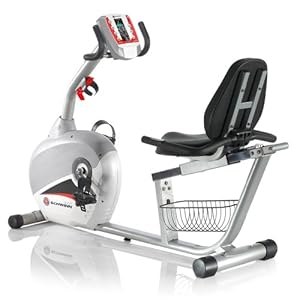
Get an excellent cardio workout at home without breaking the bank with the Schwinn Active 10 recumbent exercise bike. It features 11 preset programs, computer-controlled eddy current resistance, and a belt drive system that ensures quiet operation and a smooth ride. The grip heart rate sensors also enable you to monitor your fitness level. It includes integrated leveling feet to keep everything balanced and help protect your floor. Other features include a 9-position padded saddle and transport wheels for easy storage after your workout.


Specifications:

  • Profile: Recumbent
  • Number of workout programs: 11
  • Workout programs: 1 Manual program, 6 preset profile programs, 3 Heart Rate Control programs and 1 Target Heart Rate program
  • Heart rate monitor: Grip
  • Resistance levels: 8
  • Resistance system: Quiet Magnetic ECB (Eddy current brake) resistance
  • Display: LCD
  • Display readouts: Speed, RPM, Time, Distance, Watt, Calories, Pulse
  • Dimensions: 58.5 x 26 x 36 inches
  • Product weight: 58 pounds
  • Maximum user weight: 275 pounds
More detail this Exercise Bike Please visit :Schwinn Active 20 Series Recumbent Exercise Bike

Read more...

Saturday, May 8, 2010

Schwinn 240 Recumbent Exercise Bike

Recumbent Exercise Bike
Save money on monthly gym fees and get in shape at the same time with the comfortable Schwinn 240 recumbent exercise bike. It offers a compact design and the feel of a more traditional outdoor bike while relying on core, stabilizing muscles to balance your body weight. Features include a 20-pound flywheel, 16 resistance levels, 17 programs, adjustable seat, and both telemetry and contact heart rate monitoring.

Product Features

  • Recumbent exercise bike for the home with 16 resistance levels and 20-pound flywheel
  • 17 workout programs, including 8 course profiles, target heart rate, 2 user profiles with custom workouts
  • Telemetry-enabled, integrated grip heart rate system for easy fitness monitoring
  • Seating system with padded ergonomic seat and dual-position lumbar support
  • 300-pound maximum user weight; 5-year warranty on frame, 1 year on parts and electronics
More Detail Schwinn 240 Recumbent Exercise Bike

Read more...
Related Posts Plugin for WordPress, Blogger...

  © Blogger template PingooIgloo by Ourblogtemplates.com 2009

Back to TOP